
Booking an arborist to look at a tree is not like booking a plumber. There is no leak forcing the timing, which is exactly why it slides down the list for months and then gets done in a panic after something falls. The useful thing to know is that an assessment has a natural season, takes less of your day than you would guess, and only needs you present for part of it — once those three things are clear, it stops being hard to schedule.
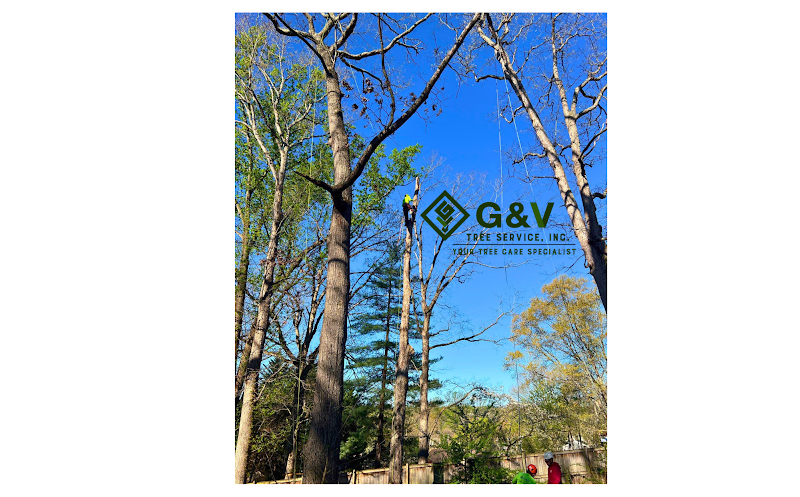
There is a right time of year, and it is not summer
Most structural problems are easiest to see when the leaves are off. Dormant season gives an arborist an unobstructed view of branch architecture, old wounds, crossing limbs and weak unions that a full canopy hides completely. If the question is “is this tree sound,” late autumn through early spring is the window that answers it best.
Growing season has its own uses. Foliage tells you things bare branches cannot — the pattern and timing of leaf-out, canopy density, early dieback, the signature of a pest or a vascular problem. An arborist assessing a tree that is declining rather than one that might be structurally unsound often wants to see it in leaf.
Both are legitimate. The point is that timing should be deliberate rather than accidental.
Book ahead of the seasons that fill up
Availability in this trade is weather-driven and predictable. Late summer into autumn, when tropical remnants track up the coast, crews across Northern Virginia get pulled onto emergency work and routine assessments slip behind it. The same happens after any significant ice event.
The quiet stretches are mid-winter outside storm weeks, and the back half of spring once the early rush has cleared. An assessment booked in one of those windows gets scheduled quickly and gets an unhurried hour rather than a slot squeezed between two emergencies.
How much of your day it actually takes
For a handful of trees on a typical lot, expect somewhere under an hour on site. A single tree with a specific question attached is often half that. Where it runs longer is when decay testing is involved — sounding the trunk with a mallet, or resistance drilling to map sound wood against decayed wood across the stem — because that is slow, careful work.
The written findings usually follow separately rather than being handed over at the gate, which is what you want. A report assembled at a desk is more considered than one improvised in your driveway.
You need to be there for the start, not the middle
The part that genuinely needs you is the first ten minutes. That is when you say what you have noticed, what has changed, what worries you, and what you are planning — a patio, a fence line, a driveway widening, selling next year. Any of those changes the recommendation substantially.
It is also when you point out what is buried. Irrigation lines, invisible fence wire, a septic field, a shallow gas run. After that the arborist mostly needs access rather than company, so an assessment fits comfortably around a working day if you can be home at the beginning of it.
Gates, dogs and the boring logistics
Most rescheduled visits come down to access. If the trees are behind a locked gate, someone has to open it. If a dog uses the yard, it needs to be in. If parking on your street is permit-controlled, say so when booking rather than letting a truck circle.
None of this is complicated, but all of it turns a confirmed appointment into a wasted trip when it goes unmentioned.
Confirming the hours before you call
Tree companies keep trade hours — typically an early start and a mid-afternoon finish, because climbing stops when the light goes. Calling at five expecting to reach the office is how people conclude a company is unresponsive when it is simply done for the day.
Business listings make this easy to check in advance. What’s Your Hours’ Springfield page for G&V Tree Service Inc sets out the company’s operating hours alongside its Springfield address, phone number and contact details, which is enough to know when a call will actually be answered and which day to aim for. Checking that before dialling saves the round of voicemail most people go through first.
When you do get through, have the specifics ready: how many trees, roughly what size, what you have noticed, and whether anything is over a structure. That converts a vague enquiry into a booked appointment in one call.
Finding the office
For anyone starting out in Bailey’s Crossroads, the directions below run from there to G&V Tree Service at 6434 Brandon Ave, Springfield VA.
G&V Tree Service Inc · 6434 Brandon Ave, Suite 204, Springfield, VA 22150 · (703) 569-2570